
Flare Efficiency Measurement

Assess the destruction and removal efficiency (DRE) of flares with precision drone monitoring.

A step towards optimised flare performance

Measuring Destruction and Removal Efficiency (DRE), how efficiently a flare converts methane (CH₄) into carbon dioxide (CO₂) during combustion, is essential for effective environmental management and compliance with OGMP 2.0 and the EU Methane Regulation.

Measuring DRE is challenging, as flares are confined and difficult to access. This is where our method steps in. Explicit has pioneered an advanced, highly accurate drone-based DRE measurement technique built on its patented Drone Flux Measurement (DFM™) Method.

Key benefits

Multiple measurements with a single payload
Fully measured data, no reliance on models
Real-time data displayed on the pilot’s RC
Emission reports within 24-48 hrs of survey
Visualisations to support source localisation
Patented, ISO-17025 accredited method
High accuracy and low detection limit
Independence from the mean wind
Drone-based measurement for flare efficiency analysis

Why trust Explicit with your DRE reporting?

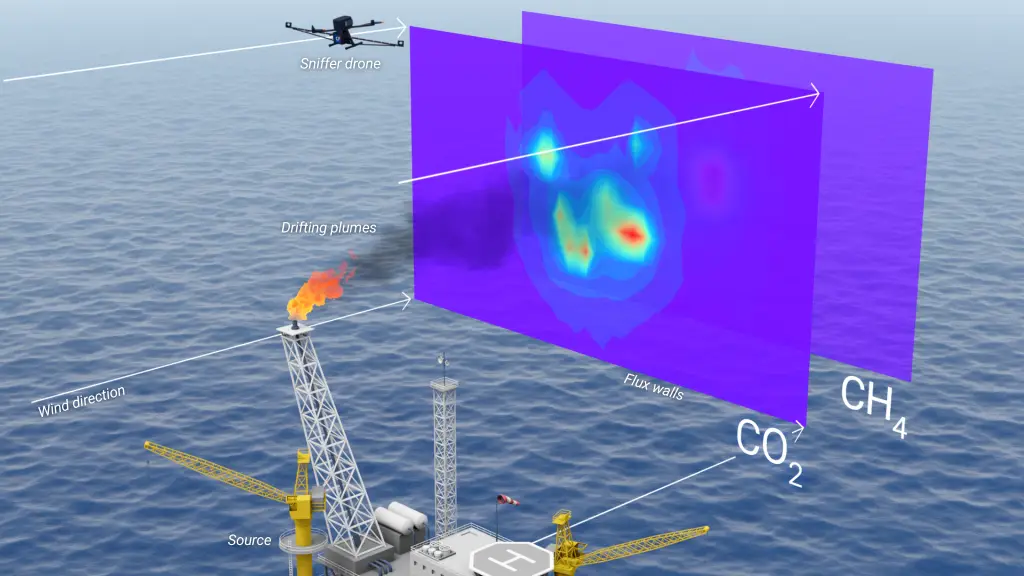
Using a unique multi-gas sampling approach, operators gain a precise understanding of their flare efficiency, derived from a fully measured quantitative ratio of CH₄ and CO₂ within the flare plume.

Data is collected directly from the emission plume downwind of the flare, ensuring complete interception of both gases for accurate calculations. The DFM™ Method is a uniquely robust in-situ sampling technique suitable for all flaring environments, overcoming layering effects caused by ignition conditions, flare design, flow rates and environmental factors, and providing operators with consistently reliable results.

From climate gases to emissions result

By combining sensors, software, and emissions expertise into a single integrated solution, Explicit provides a full ISO 17025-compliant service.

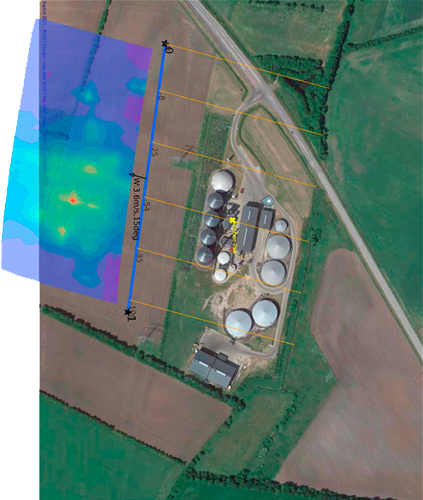
Map of emission sources plotted for drone flight planning during DFM™ Method
Preliminary site survey and sampling plan

The site is assessed to identify potential emission sources, risk zones, and feasible flight paths. A tailored sampling plan is then developed to ensure efficient and reliable data collection.
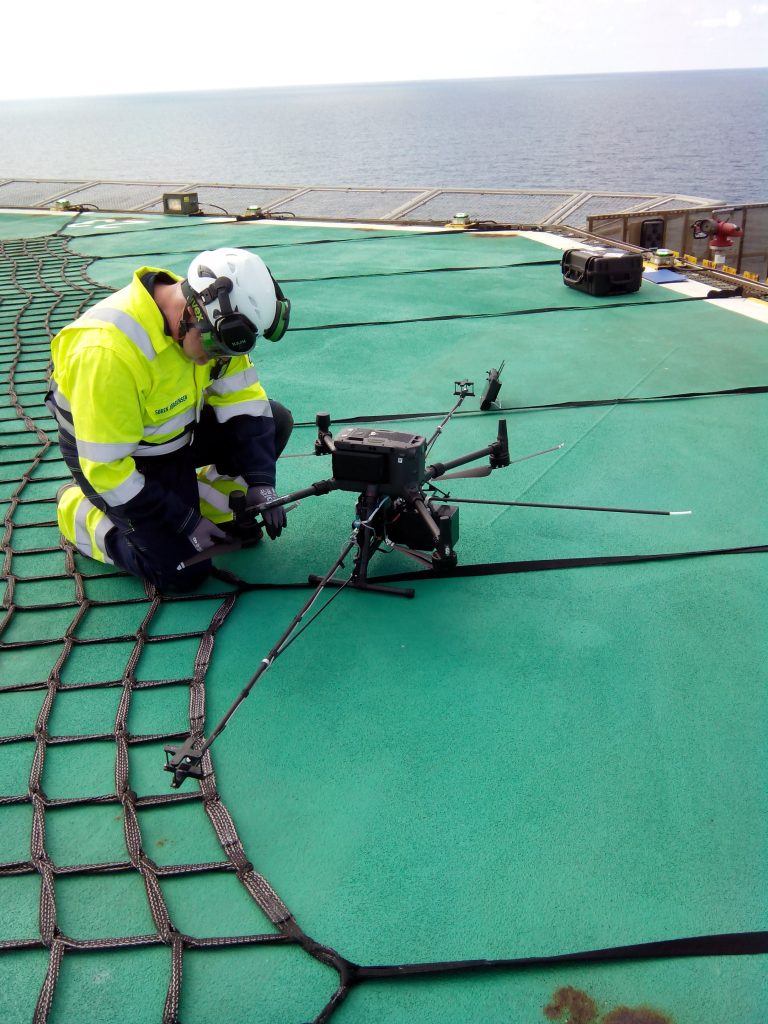
Explicit team member setting up a drone for greenhouse gas data collection using the DFM™ Method
Drone setup and data collection

Gas and wind sensors are integrated with the drone before flight. Using an adaptive flight pattern, the drone flies a vertical wall downwind from the site of interest, collecting thousands of data points.
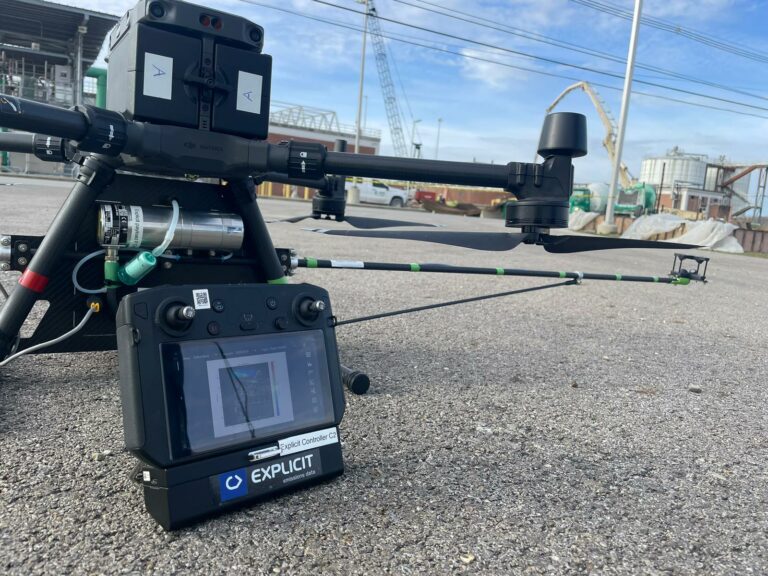
Explicit drone and remote controller displaying emissions data insights during DFM™ Method analysis
Data processing and final analysis

Automated analysis is provided to the pilot with real-time flight feedback. After data collection, the analyst combines the results with the client's flow rate and gas concentration data to produce the flare DRE assessment.
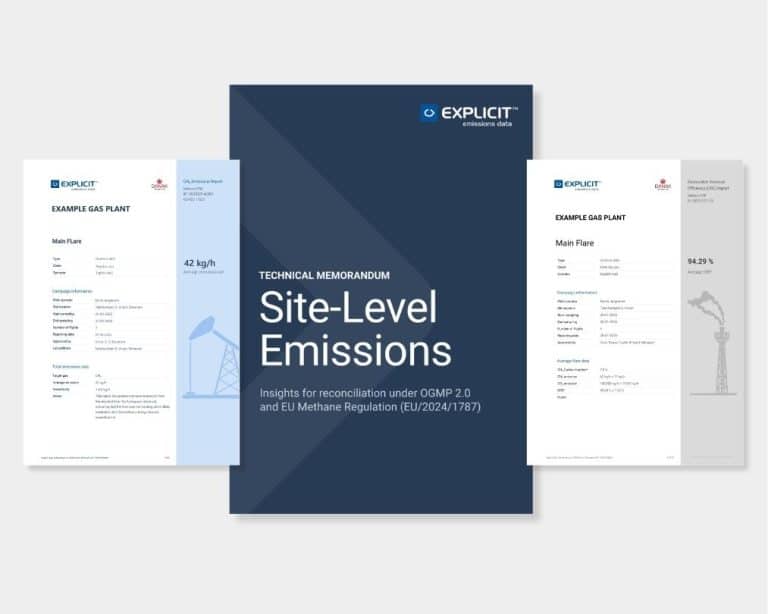
Mockup of an Explicit emissions report
DRE report and reconciliation insights

A comprehensive report is presented to the client with quantified emission rates, flare destruction efficiency (%), key findings, and visualisations that support informed decision-making.
Industries and applications

Oil and gas sector
Quantifying DREs for reporting and operations optimisation on both offshore and onshore platforms.
Biogas plants
Quantifying DREs to improve plant performance and sustainability.
Waste water treatment plants
Quantifying DREs to improve plant performance and sustainability.
Research
Quantifying validated datasets for academic, regulatory, or industrial studies.
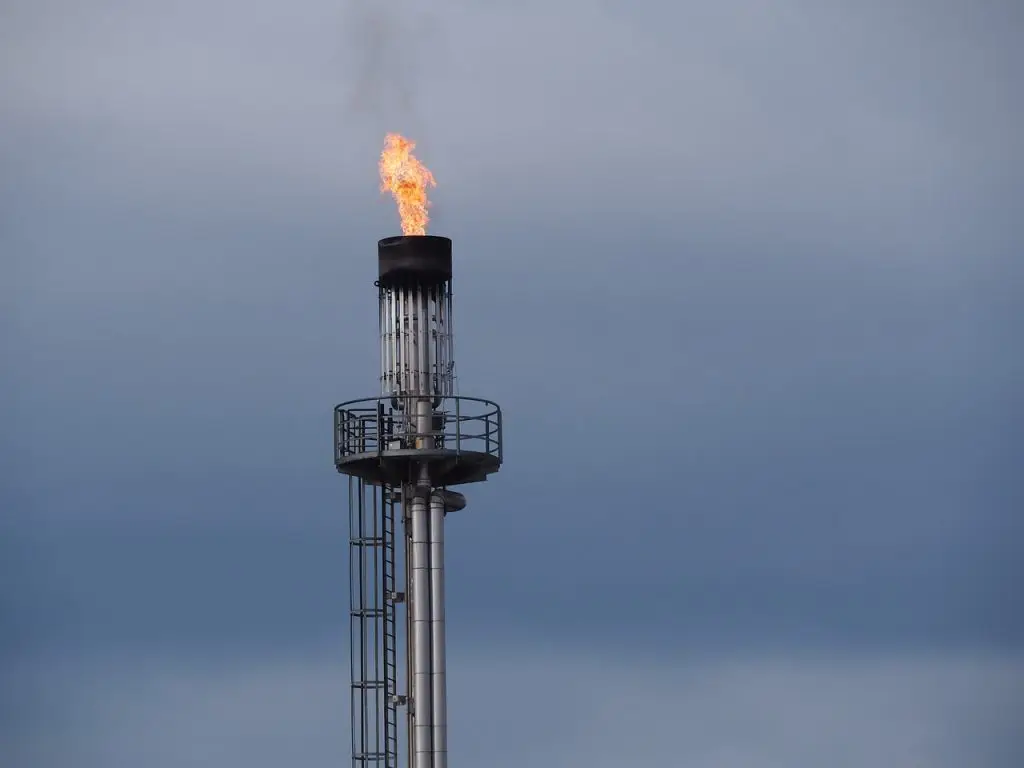
Lit flare tower at an industrial site for Explicit's FlareE project on drone-based flare efficiency measurement

Project Spotlight: Flare Efficiency (FlareE)

In partnership with Equinor ASA and supported by the Energy Technology Development and Demonstration Programme (EUDP), Explicit developed and demonstrated a breakthrough methodology for measuring flare DRE using drone-based in-situ sampling.

The technology and method developed in this project were demonstrated for use on elevated and ground flares. Explicit also keeps investigating the integration of additional gas analysers for the quantification of other combustion products.