

From methane measurement to reconciliation: EUMR and OGMP 2.0 compliance
The future of methane compliance is measurement-based Methane emissions monitoring is moving from estimates towards measurements. For oil and gas operators, the EU Methane Regulation (EUMR) and reporting frameworks such as OGMP 2.0 are driving this shift. Estimates are no longer enough. Operators need reliable emissions data showing how much is emitted, where it originates, and whether source-level measurements match site-level measurements. This puts the measurement quality under the spotlight. Multi-parameter approach to emissions measurements Explicit’s patented Drone Flux Measurement (DFM™) Method leans on a multi-parameter approach to emissions monitoring. While the drone flies downwind from the site, along every transect of the flux wall, the DFM™ payload simultaneously measures: Methane (CH₄) Carbon dioxide (CO₂) Wind speed Wind direction Temperature Pressure Humidity This matters because CH₄ emissions do not exist in isolation. Wind speed and direction determine how a plume disperses through the atmosphere, while temperature, pressure and humidity provide additional context for the conditions on site. The DFM™ Method uses these parameters, captured continuously during the survey, to calculate net emission rates for both CH₄ and CO₂ (kg/h) across the inspected area, without relying on atmospheric modelling or secondary data inputs. This enables reliable source allocation, helping

Turn emissions data into operational intelligence with Explicit’s API
Emissions monitoring is becoming progressively data-driven. But measuring emissions is only one part of the challenge. The real value comes from what happens after the measurements are completed. For operators managing large, complex assets, emissions data needs to be transparent, actionable, and comparable. Static reports can document what was measured, but they can make it difficult to bring emissions intelligence directly into the workflows teams already rely on. That is the gap Explicit’s Application Programming Interface (API) is designed to bridge. From measurements to insights Built on its patented Drone Flux Measurement (DFM™) Method, Explicit’s API integrates seamlessly with operators’ emissions management software, automating workflows to enable faster decision-making and transparent regulatory reporting. The API provides structured emissions data in standard JSON format, together with supporting flux wall visualisations in PNG format. This means teams can access both the quantified emissions and the visual evidence behind the measurement, delivering a more complete picture. For operators, this creates several key advantages: 1. Integrate emissions data directly into existing systems Explicit’s standard REST API can integrate with existing dashboards, data lakes, GIS platforms, digital twins, 3D models, analysis tools and emissions management software. This allows emissions data to become part of the

5 ways Explicit’s Emissions Lab (E-Lab) streamlines emissions monitoring
Accurate emissions monitoring demands more than just measurement technology. It demands a structured, end-to-end workflow that connects every stakeholder, from pilot to client. That is exactly what Explicit’s Emissions Lab (E-Lab) is built to deliver. The E-Lab is an integrated proprietary software platform, designed to support pilots, emissions analysts, and clients throughout the survey lifecycle: from pre-flight planning to quality-checked reporting. Built on ISO/IEC 17025 compliant data management principles, the E-Lab ensures that every survey is executed with precision and full data integrity. Here’s how it helps streamline the emissions monitoring workflow: 1. Thorough pre-flight planning that eliminates coverage gaps Before a pilot sets foot on-site, the E-Lab enables project managers to carry out thorough pre-flight planning. Using data provided by the client, emission sources are mapped, and a comprehensive sampling plan is specified, ensuring complete spatial coverage during the survey flight. This structured approach eliminates gaps in data collection and supports reliable results across repeated measurements. 2. DFM™ app integration that supports pilots on-site The E-Lab is directly integrated with the DFM™ app on the pilot’s remote control. Before each flight, pilots can access a full pre-mission, including detailed site maps, identified emission source locations, designated risk zones, and
Emissions in 3D: Explicit’s data visualisation capability
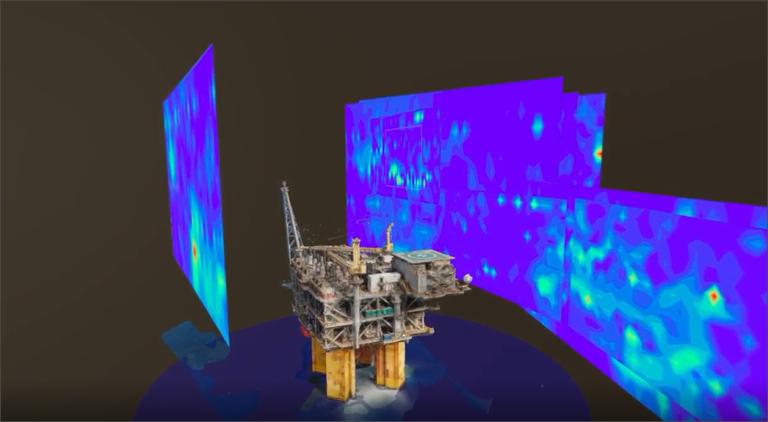
At Explicit, we are committed to delivering actionable data that helps our clients make informed decisions. One of our newest developments is the support for 3D visualisations of emissions data. By working closely with clients’ digital teams, we provide measurement data in meta formats that integrate seamlessly into their existing 3D site models. Better insights through 3D This approach makes site-level measurements much clearer. The visualisations allow clients to see emission sources within a full spatial context. The vertical perspective adds depth and clarity, helping to pinpoint sources more precisely than traditional 2D maps. Our capability supports multiple data types beyond CH₄, including wind, CO₂, and temperature, to enable accurate source allocation. 3D visualisations make it easier to identify emission hotspots, reconcile source and site-level measurements, and improve both monitoring and mitigation strategies. This technology is particularly useful in offshore environments, where illustrative maps alone can be limiting. Case study: 3D emissions visualisation at the Shenzi platform In 2024, Woodside Energy conducted a field deployment trial at its Shenzi platform in the Gulf of Mexico to evaluate the performance of methane measurement technologies. Explicit was among the operators participating in the study. As part of this collaboration, we provided measurement
5 best practices for emissions monitoring: The Explicit approach
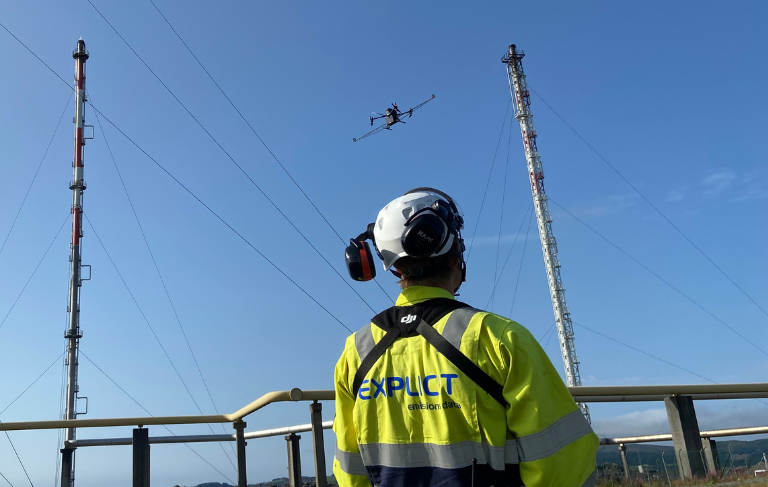
The world is on a mission to reduce greenhouse gas emissions for a more sustainable future. However, the success of these efforts relies on the ability to credibly measure such emissions. As the famous mathematician Lord Kelvin said, “If you cannot measure it, you cannot improve it.” Without reliable data, we cannot assess the true effectiveness of environmental initiatives, regulations, and reduction strategies. This is where Explicit steps in. We are data specialists at heart. Our approach is anchored in solid science, validated methods, and proven drone-based technologies. Here are some of the best practices we have developed over a decade of experience in emissions monitoring: Transparent methodology At Explicit, we rely entirely on measured data, not models or black-box calculations. We measure every parameter essential to calculating the mass flux rate. Gas and wind speeds are calculated directly from drone flights, and emissions are summed across each flux wall. Our method ensures high accuracy and credibility for regulatory compliance and environmental reporting. Advanced multi-sensor technology Our payload is built with multiple sensors for methane (CH₄), carbon dioxide (CO₂), wind, temperature, pressure, and humidity. This allows us to measure gas quantities, characterise sources, and assess flare and engine efficiency in
5 questions to ask before selecting an OGMP 2.0 site survey vendor
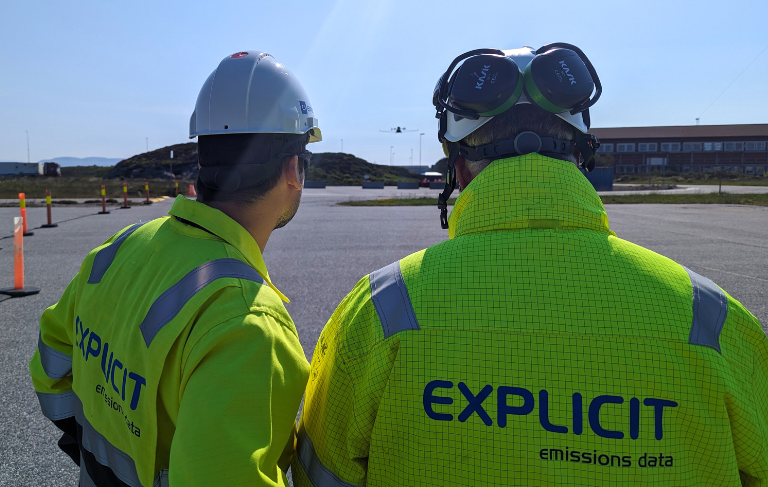
Selecting the right vendor for an OGMP 2.0 (Level 5) site survey isn’t just about ticking a box; it’s about ensuring you get accurate and actionable emissions data. At Explicit, we’ve learned that the difference between a smooth survey and a frustrating one often comes down to the questions asked before work begins. Here are five key questions to help you choose your site survey partner: 1. What logistics are involved in a site survey? Before committing to a vendor, it’s worth understanding what’s required on the day. Some site surveys can be a logistical nightmare – large kits, multiple cases, heavy equipment, and long setup times. We’ve heard stories from clients where the logistics get in the way of operations. That’s why we’ve designed our DFM kits to be as streamlined as possible. Everything needed is contained in a single pelicase, including a backup set and tools. Our plug-and-play solution means minimal setup and more time spent gathering valuable emissions data. 2. How is the data made visible, and how is its validity ensured? A successful survey depends on more than just collecting data; it’s about knowing the data is correct before leaving the site. If measurements taken by